














The world of cleansers can be confusing. Gels! Milks! Balms! Oils! Foams! Mousses! Creams!
But don’t let the variety fool you—finding your go-to cleanser is exceptionally uncomplicated.
It all comes down to your skin type.
What Is Your Skin Type
Here’s a quick refresher: your skin type (unlike a skin concern) is the fundamental state of your skin, which rarely (if ever) changes. Skin concern, on the other hand, is a temporary skin issue you’re dealing with.
There’s five main skin types.
Dry skin: When your skin lacks oil (not water, that’s dehydrated skin which is a skin condition, not a skin type) and it is very common. Because your skin is slacking off with oil production, it also tends to feel rough and tight.
Oily skin: That’s when your skin produces too much oil. Usual side effects include excess shine, prone to blemishes and congestion, and generally features large, coarse pores.
Combination skin: That’s a bit of both. You’ll likely have both oily and dry spots on your face. Combo skin exists on a spectrum, so depending you might veer more oily or dry.
Sensitive skin: That’s any skin that’s prone to reactions: rashes, inflammation, and redness.
Normal skin: Consider this just skin. Not too dry and not too oily, this is skin that’s pretty balanced and well-behaved. No major complaints.
Ageing skin: Remember how I said sometimes your skin type changes? Usually it’s the transition into the ageing skin camp with time. Ageing skin is characterised by losing its elasticity, showing more fine lines and wrinkles.
The Best Cleansers For Oily Or Breakout-Prone Skin
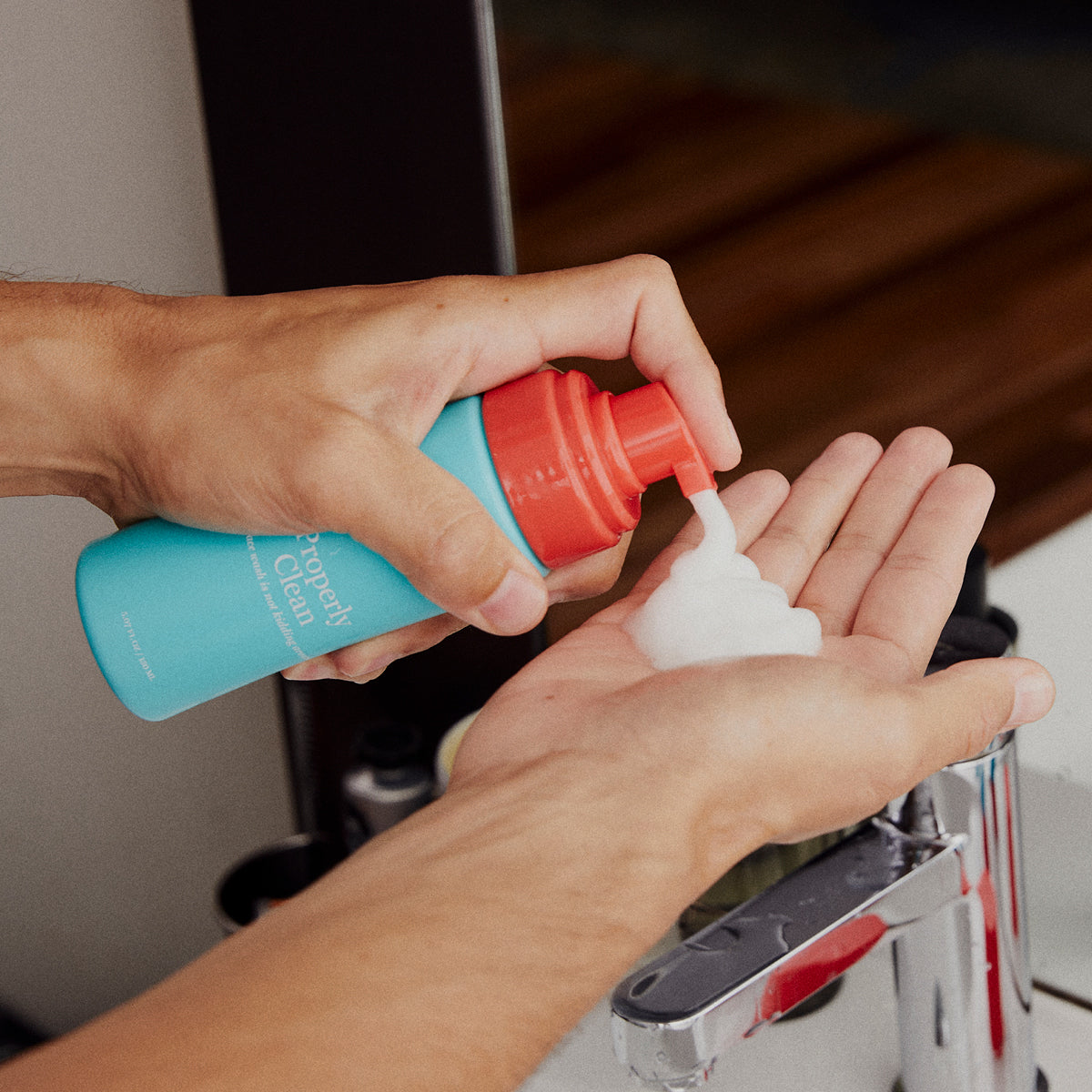
Those with oily or acne-prone skin tend to experience shine, regular blemishes and congestion, and generally large, coarse pores. All of that excess oil requires a little extra effort to keep your skin thoroughly cleansed. Cleansing foams and mousses are designed to give skin a deep cleanse which makes them perfect for the oily or breakout-y.
The Go-To cleanser: Properly Clean
The Best Ingredients To Cleanse Oily Or Breakout-Prone Skin
Beyond all those fabulous cleansing agents, a great oily skin cleanser will incorporate ingredients designed to help balance oil, curb shine, and tame breakouts.
Willowbark: Derived from the willow tree, this natural exfoliant contains salicylic acid to help the skin shed dead skin cells and clear pores.
The Best Cleansers For Dry Or Mature Skin
Whether your skin type is dry (lacking oil and prone to feeling tight, dry, or even rough) or mature, you’re going to want to cram hydration into your routine wherever you can, to make up for all that oil your skin isn’t naturally producing.
The Go-To cleanser: Soft and Creamy
The Best Ingredients To Cleanse Dry And Mature Skin
Hydrated skin? Start at step one. Finding a cleanser packed with ingredients that are going to rehydrate your skin—not strip—is key. Look out for ingredients like:
Glycerine: This 100% plant-derived ingredient is an excellent humectant that reduces moisture loss by holding water within the surface layers of the skin to prevent skin from drying out. Nice!
Squalane: Derived from olives, squalane has a very similar composition to human sebum so it helps support and replenish the skin barrier to help prevent moisture loss and dryness.
The Best Cleansers For Normal Skin
If your skin is supple, smooth, plump, with small-medium pores, and a healthy colour—we deem that, just skin. Your face is content. And that is the easiest skin type of all when it comes to picking products.
The Go-To cleanser: Juicy Gel
The Best Ingredients To Cleanse Normal Skin
While normal skin isn’t necessarily struggling with skin issues that need to be managed, a cleanse is the perfect time to energise and hydrate your face. Look out for:
Cucumber extract: A botanical extract which contains many nutritious components of the cucumber fruit. Mega hydrating and also mega refreshing—making your daily extra invigorating.
Provitamin B5: Also known as panthenol, this (water absorbing) humectant helps to soothe and replenishes any hydration that your cleanser might sweep away.
The Best Cleansers For Combination Skin
A case of shine AND dry patches? At the same time? Congrats, you’ve got combination skin. Combo skin exists on a spectrum, so depending on whether you veer more oily or dry, you might get an oily T-zone at 5PM, or find your fine lines become more pronounced throughout the day. (Respectively.)
The Go-To cleanser: Juicy Gel
The Best Ingredients To Cleanse Combo Skin
Combo skin deserves a cleanser that’s a true all rounder. Something that’s going to tame any oily patches but not exacerbate your dry spots. Somethings rich in:
Aloe vera leaf extract: This ingredient helps nourish and soften the skin to help reduce dryness and flaking.
Coconut acid: This is an ultra gentle cleansing agent. Its water-loving and oil-loving properties help rinse away dirt, balance oily patches, and take care of any lingering residue.
The Best Cleanser For Sensitive Skin
Often, cleansing can feel like the arch nemesis of sensitive skin. A quick cleanse and suddenly stinging, discomfort, and dryness ensue. That’s why it’s especially important for sensitive skin to find a cleanser specifically formulated for their skin type—from the ingredients to the actual feel on the skin.
The Go-To cleanser: Mellow Milk
The Best Ingredients To Cleanse Sensitive Skin
Water! Friction! Cleansing agents! All of which put sensitive skin under duress. That’s why a sensitive skin cleanser demands not only hydrating ingredients, but something that is going to actively soothe the skin. Look out for:
Colloidal oatmeal: Naturally rich in lipids, proteins, and vitamins, colloidal oatmeal boasts mega moisturising properties as well as write-home-about-level soothing effects. Not only does it help cleanse, it’s been clinically proven* to improve skin hydration and impart soothing benefits to the skin.
The Best Cleansers To Remove Makeup
Any good cleansing routine features a double cleanse—the very crucial two-step process to thoroughly clean your face, and starts with an oil cleanser.
Regardless of your skin type, if you’re wearing makeup or SPF every day, (Which you should be!) (We meant it!) then you should be double cleansing to properly break down and remove these from your skin. Think of this as your pre-cleanse, before your water-based cleanser jumps in to actually clean your face.
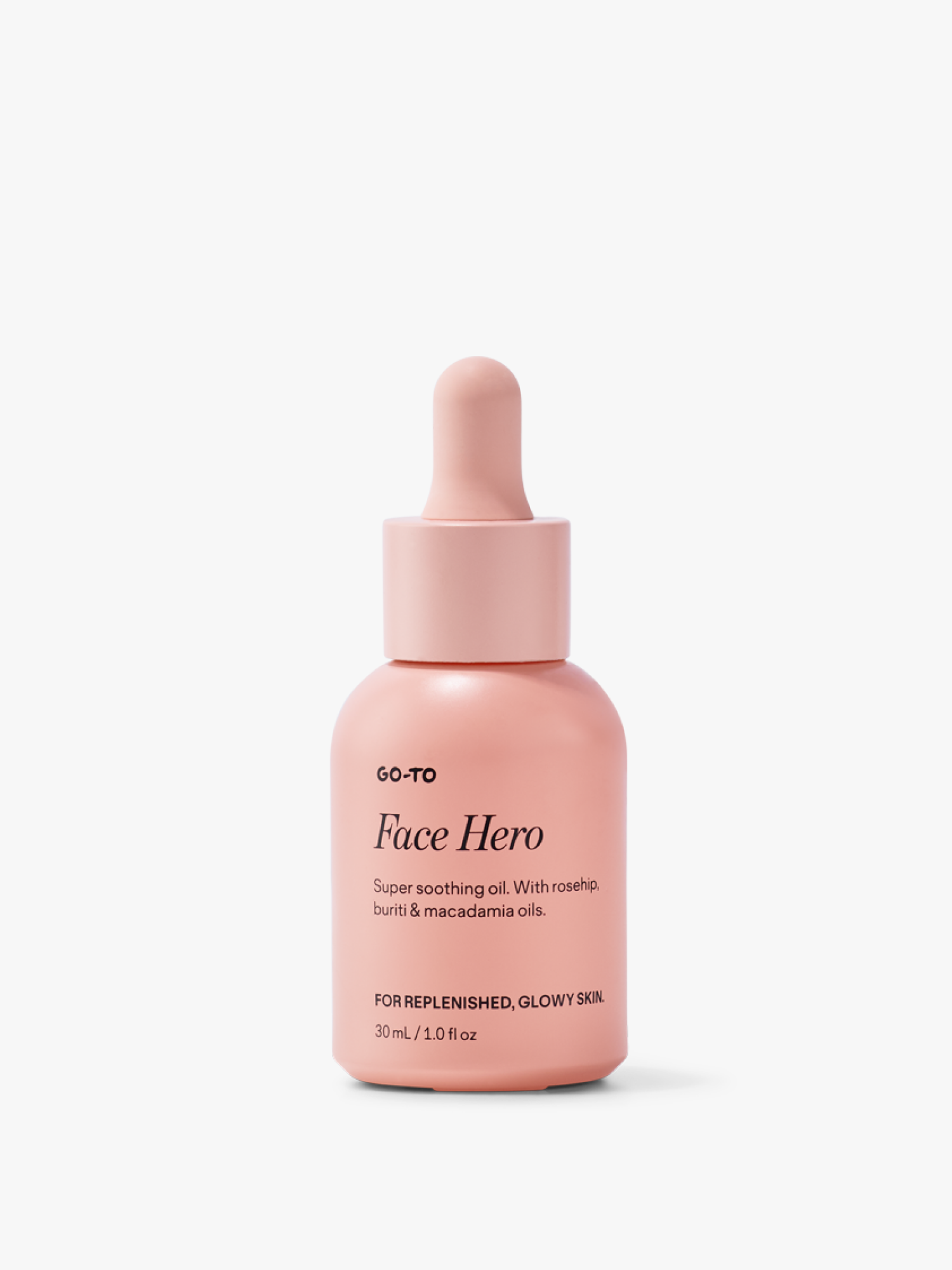
The Go-To cleanser: Fancy Face and your cleanser of choice.
What Go-To cleanser is right for my skin type?
Your Go-To Cleanser Guide
|
Dry Skin |
|
|
Oily Skin |
|
|
Normal Skin |
|
|
Sensitive Skin |
|
|
Mature Skin |
|
|
Combination Skin |
Should I use the same cleanser morning and night?
You absolutely can. If your cleanser leaves skin clean, comfortable, and never tight, there’s no need to complicate things. Dry or very dry skin may prefer to skip the morning cleanse altogether, while oily or breakout-prone skin might prefer something gentle in the morning and more thorough at night.
If you wear makeup and SPF (the latter of which you very much should!), we recommend double cleansing at night.
Is a gel or cream cleanser better for sensitive skin?
It’s less about gel versus cream and more about the formula itself. Look for something ultra-gentle, fragrance-free, and designed to cleanse without stripping the skin barrier. Milk cleansers—like Mellow Milk—are a great pick due to its ultra-soothing qualities.
Can I use an oil cleanser if I have acne?
Yep! A well-formulated oil cleanser can help dissolve makeup, sunscreen, and excess sebum without worsening your 3PM shine.
Just be sure to rinse it off thoroughly and follow with a water-based cleanser suited to oily or acne-prone skin.
How often should I change my cleanser?
Only when your skin gives you a reason to.
If your cleanser is doing its job without causing dryness, tightness, irritation, or congestion, there’s no need to change things up.
Of course, you might want to switch out formulas when the seasons change and your skin needs some extra support from step one of your routine.
Is double cleansing necessary, and what cleansers should I use?
If you’re wearing makeup and or sunscreen, definitely!
Double cleansing revolves around the science-y idea that like dissolves like. Meaning, an oil cleanser is better suited to breaking down oils on your face (like makeup and SPF) while a water based cleanser is better suited at targeting water-based grime (sweat!).
*Clinically tested on 15 volunteers, using a product containing 2% Oat COM USP for 5 days after being irritated with sodium laureth sulfate.

Comments